
Sub-Total: $0.00
Eversolo DMP-A8 Power Supply Upgrade Review: Does a Linear Power Supply Improve Sound Quality?
Author: Jim Kotsakidis
Contributors: Iliyan Selenski
Introduction
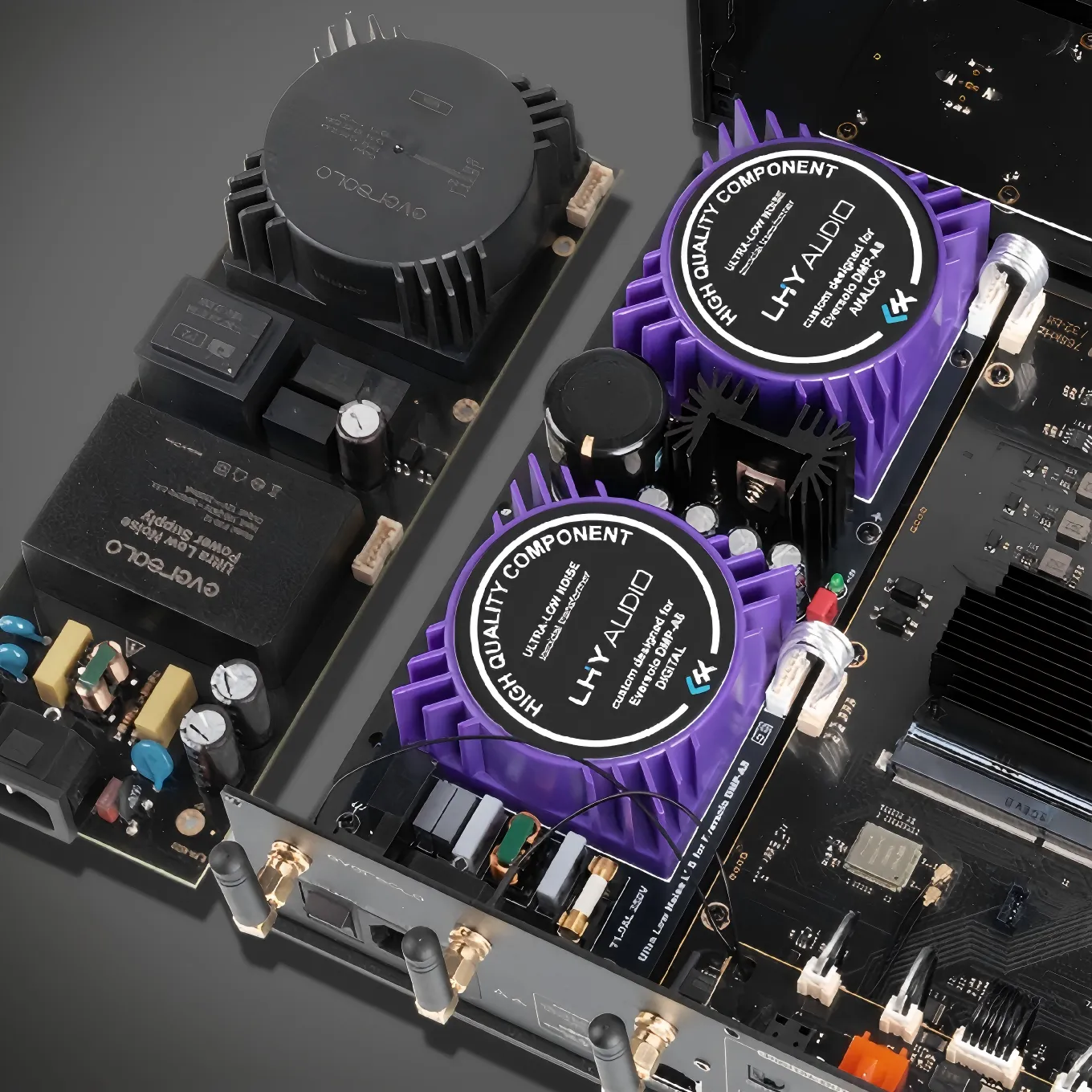
The Eversolo DMP-A8 has quickly built a reputation as one of the best-performing streamers in its class. But like many digital components, its performance is heavily influenced by the quality of power and network infrastructure feeding it.
This raises an important question:
Can upgrading the power supply actually improve digital audio performance — even when dealing with “just 1s and 0s”?
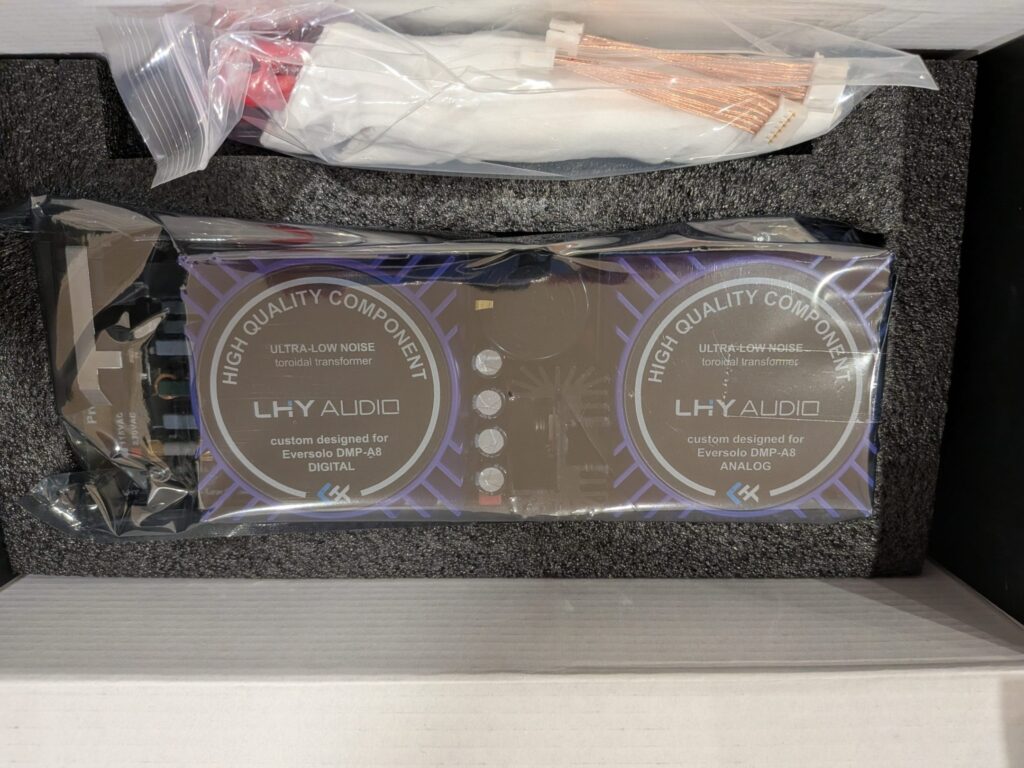
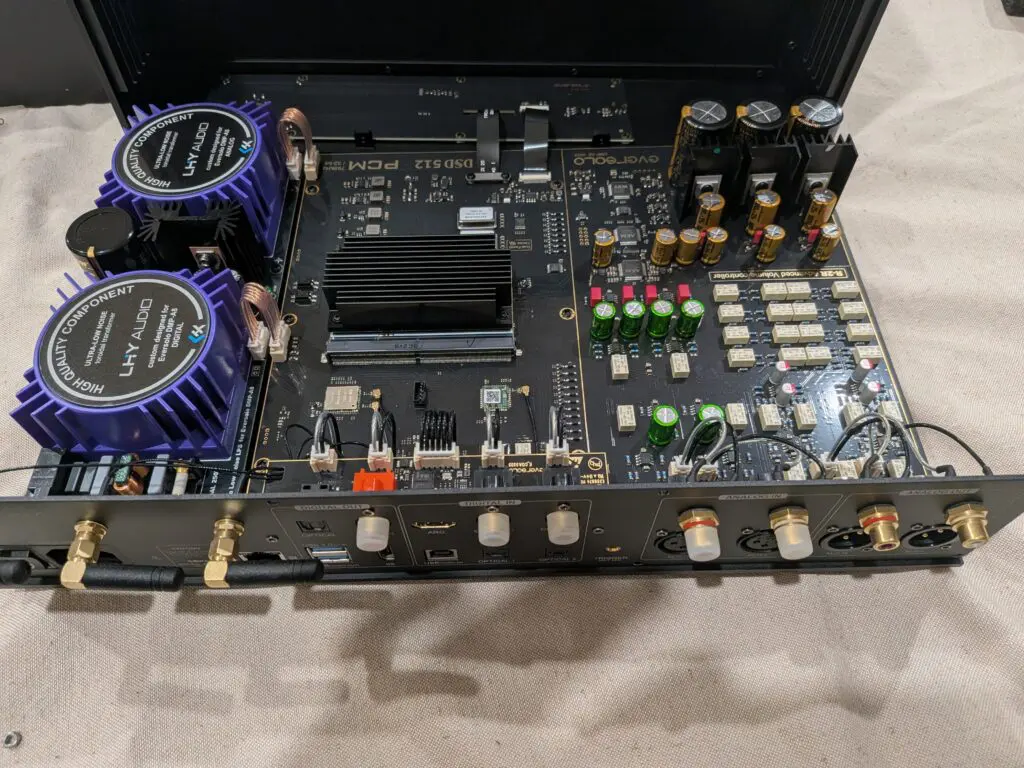
To find out, we conducted a controlled listening test comparing the stock unit against one upgraded with the LHY Audio LPS-A8, followed by further system optimisation using the LHY Audio LPS-80 on the network side.
Test Setup
To ensure a fair and instant comparison:
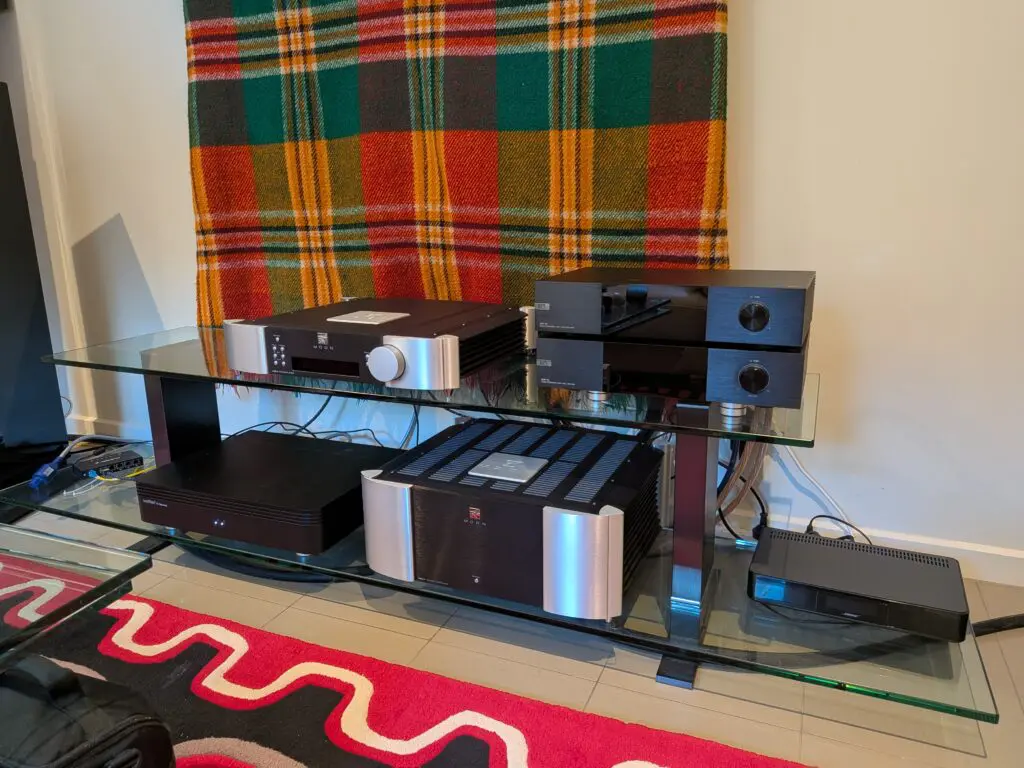
- Two identical DMP-A8 units were used
- One stock, one with LPS-A8 upgrade
- Both connected via XLR into the MOON 641 Preamplifier
- Then into the MOON 860 Power Amplifier
- Both streamers grouped in Roon for real-time A/B switching
This setup allowed us to remove memory bias and hear differences immediately.
Listening Results: Stock vs LPS-A8
The stock DMP-A8 already delivers strong performance — clean, detailed, and balanced.
However, introducing the LPS-A8 resulted in clear improvements:
- Lower noise floor (“blacker” background)
- More precise imaging and instrument placement
- Improved microdetail and separation
- A more natural, effortless presentation
Switching back to the stock unit made the sound feel flatter and slightly compressed by comparison.
Network Upgrade: Adding the LPS-80
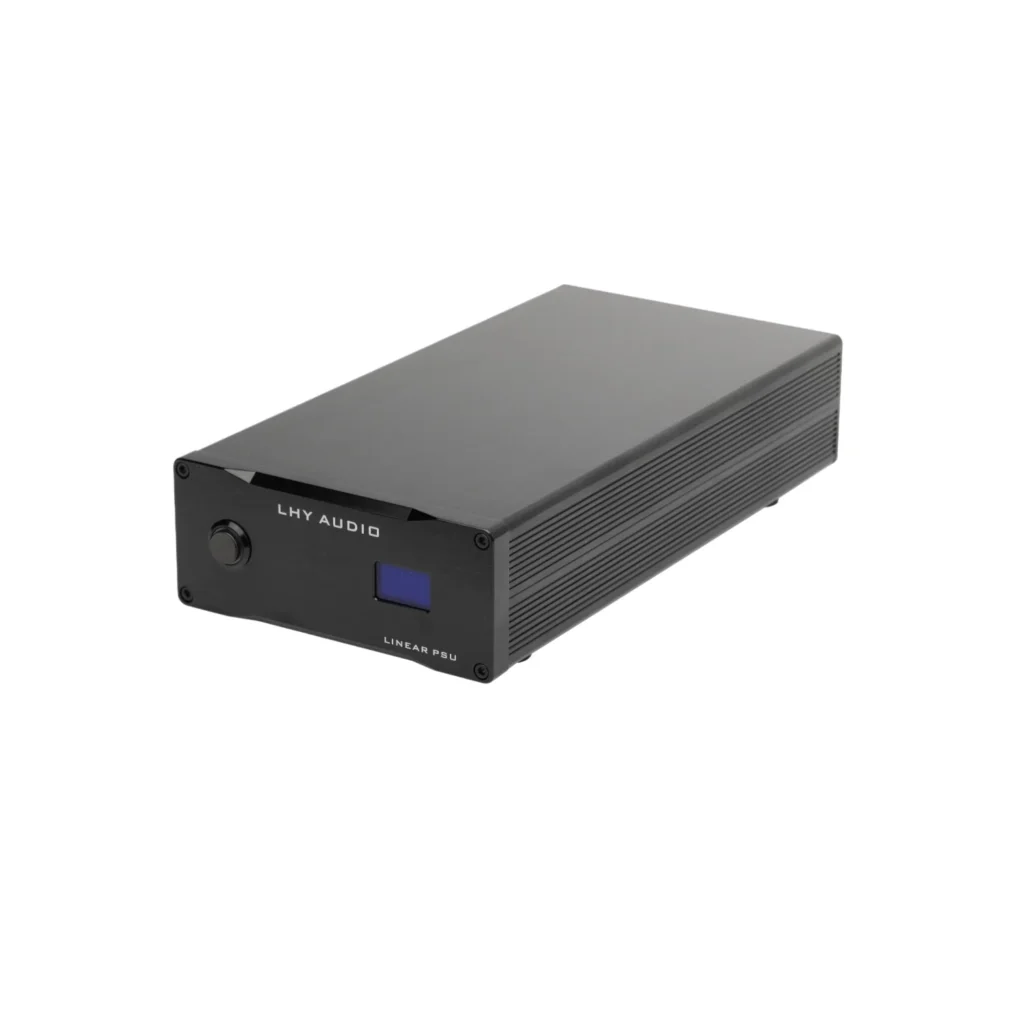
We then powered the system’s router using the LPS-80.
This brought further gains:
- Increased transparency
- Tighter, more controlled bass
- Sharper imaging and spatial definition
- Greater stability in complex passages
The entire system benefitted — not just the streamer.
The Theory: Why Power Supplies Matter in Digital Audio
A common argument is that digital audio is immune to these changes because it’s “just 1s and 0s.” In reality, the situation is more complex.
1. Noise Affects Signal Integrity
Digital signals are transmitted as electrical waveforms, not abstract binary code. These waveforms rely on clean voltage transitions to represent 1s and 0s.
When noise is present in the power supply:
- Edges of the signal become less defined
- Timing uncertainty (jitter) increases
- The receiving device has to “work harder” to interpret the signal
While error correction ensures data arrives intact, timing accuracy is not corrected in the same way.
2. Jitter and Timing Errors
Jitter refers to small timing variations in when digital bits arrive.
Even if the data is correct, poor timing affects:
- DAC conversion accuracy
- Phase coherence
- Stereo imaging precision
A cleaner power supply reduces electrical noise, which in turn stabilises clocking circuits and lowers jitter.
3. Noise Floor and Analogue Stages
The DMP-A8 is not purely digital — it contains sensitive analogue output stages.
Power supply noise can:
- Bleed into analogue circuitry
- Mask low-level detail
- Reduce dynamic contrast
By lowering noise, linear power supplies allow finer details to emerge more clearly.
4. Network Noise and System-Wide Impact
Streaming introduces another layer: network hardware.
Routers and switches are often powered by noisy switching supplies. This noise can travel through:
- Ethernet cables
- Ground planes
- Internal circuitry of the streamer
By using the LPS-80 on the router, we effectively reduced noise entering the system upstream — which explains the additional gains in clarity and imaging.
Conclusion: Are Power Supply Upgrades Worth It?
In this system, the improvements were not subtle.
- The LHY Audio LPS-A8 elevated the Eversolo DMP-A8 beyond its already strong baseline
- The LHY Audio LPS-80 further refined the entire signal chain
The key takeaway is this:
Digital audio performance is not just about data accuracy — it’s about how precisely that data is delivered, timed, and converted.
Reduce noise, and the system reveals more of what’s already there.