
Sub-Total: $0.00
From Wi-Fi to Wired and Beyond: My Eversolo Journey to Improve My Audio Experience
Author: Jim Kotsakidis
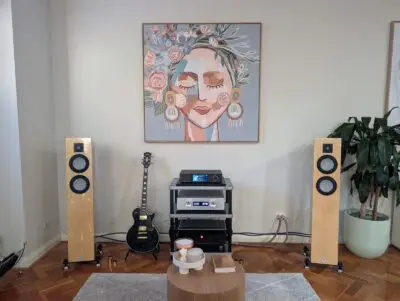
Like many enthusiasts, I started my digital streaming journey with convenience in mind. My Eversolo DMP-A8 was connected via Wi-Fi to my Telstra router. It worked music streamed effortlessly but something always felt slightly off. The soundstage was flat, and imaging lacked the precision I knew my system was capable of by listening and comparing to other systems.
The Shift to Wired: CAT7 and the Immediate Difference
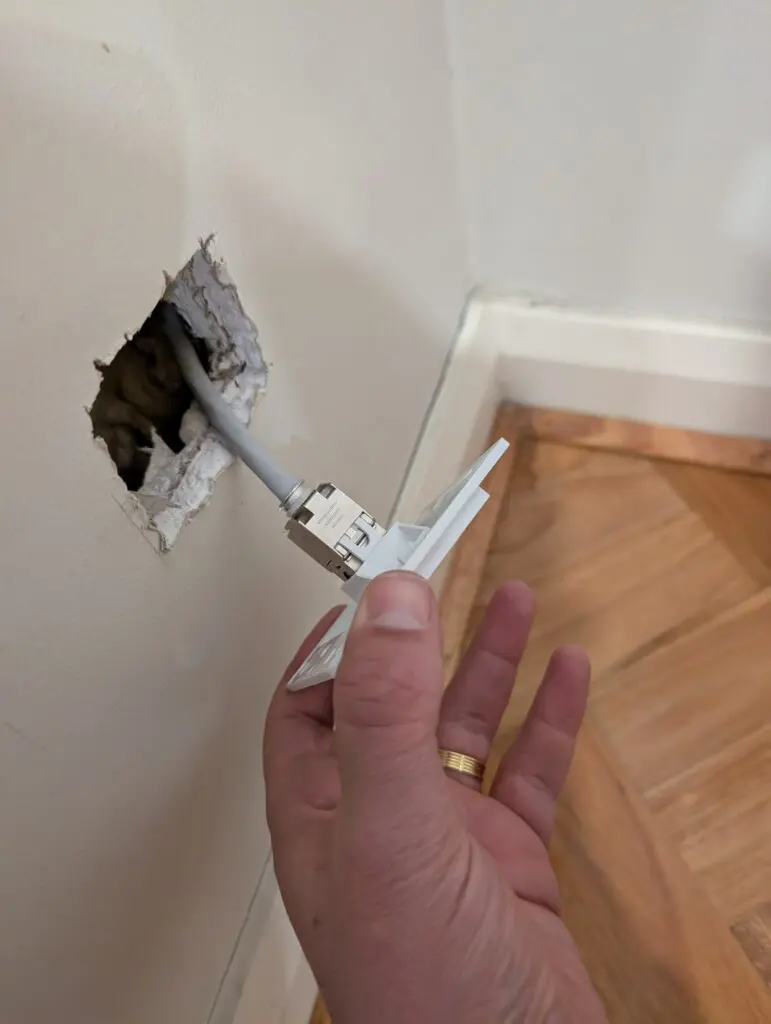
Determined to eliminate any weak links, I decided to hardwire the connection. This wasn’t a simple task I ran CAT7 cable internally through my walls, threading it through insulation and tight spaces. It was time-consuming and a little frustrating at times, but once complete, the result was worth every effort.
The improvement was immediately noticeable. The soundstage opened up, instruments found their place, and imaging locked in with pinpoint accuracy. Bass tightened up, the background became quieter, and overall presentation felt more dynamic and effortless.
Many people argue that Wi-Fi is galvanically isolated meaning it breaks the physical electrical connection between devices and can reduce noise. While that’s true in theory, it introduces another problem: timing. Wi-Fi is a shared, packet-based medium, where data competes for bandwidth with every other device on your network phones, smart TVs, even background updates. This competition causes variations in packet delivery times (jitter), and for a high-end streamer like the Eversolo, that means more processing effort to reassemble data cleanly before conversion.
By contrast, a wired Ethernet link offers dedicated, consistent timing with minimal packet loss or retransmission. The Eversolo can now focus its processing power on audio tasks not on dealing with unpredictable network latency.
Introducing the LHY Audio AS6: Taking It Further
Just when I thought the system couldn’t get much better, I added a LHY Audio AS6 between the Telstra router and the Eversolo. The setup was simple: the isolated port of the AS6 connected to the router, and the LAN port connected directly to the Eversolo.
The results were nothing short of stunning. The noise floor dropped dramatically, background silence was almost black. The soundstage deepened and widened, imaging gained an almost holographic precision, and the smearing in the bass region has almost disappeared.
This level of refinement can be attributed to the AS6 superior clocking and power supply design. By providing a cleaner Ethernet signal with reduced electrical noise and more stable clock synchronization, jitter is minimized. The result is digital data arriving at the streamer with more consistent timing, allowing the DMP-A8 to perform at its best.
Looking Ahead: Going Fibre and Roon Server
The next step in this journey will be to run fibre internally within the house. Fibre offers complete galvanic isolation, ensuring that no electrical interference can pass between network components. It also supports longer distances and higher bandwidth without degradation, providing a pristine, low-noise foundation for any digital audio system.
What this means is that internal fibre networking eliminates any residual electrical coupling between digital devices it’s the cleanest possible way to deliver data to your streamer. I will have to acheive this with either a Fibre media converter or the AS6 switch which has an optical port built in.
I also plan to start experimenting with adding Roon into the playback chain. The idea is simple but powerful. By running Roon Server on a separate device (My NUC), it can pre-buffer the incoming stream from online services (like Qobuz or Tidal) before handing it off to the Eversolo DMP-A8 for playback.
This means the streamer no longer has to handle live network requests or adaptive buffering it receives a steady, pre-cached stream that’s already synchronized and cleanly timed. In theory, this should reduce timing inconsistencies even further, lowering the processing burden on the Eversolo and improving the accuracy of its clock recovery and conversion stages. (Stay tuned for this)
Final Thoughts
This experiment reinforced a simple truth: in high-end digital audio, network design matters. Each layer from cabling to switches to power supplies contributes to the final sonic outcome.
Switching from Wi-Fi to wired CAT7 transformed my system, and introducing the LHY Audio AS6 elevated it even further. For those willing to put in the work, the rewards in soundstage realism, tonal purity, and musical engagement are truly remarkable.